
Thyroid nodules are a common health concern affecting millions of people worldwide. While many thyroid nodules are harmless and do not require treatment, some become large enough to cause visible neck swelling, difficulty swallowing, breathing problems, or cosmetic concerns. Traditionally, surgery was considered the standard treatment for symptomatic thyroid nodules. However, modern interventional radiology has introduced a safe, minimally invasive alternative known as Thyroid Artery Embolization.
If you are looking for a non-surgical treatment option, Thyroid Artery Embolization offers an effective solution without the need for large incisions or prolonged hospitalization. Patients searching for Thyroid Artery Embolization Near Me in Srinagar can now access advanced minimally invasive care under the expertise of Dr. Irshad Banday, one of the leading Interventional Radiologists in Kashmir.
This comprehensive guide explains everything you need to know about Thyroid Artery Embolization, including symptoms, causes, diagnosis, procedure, benefits, recovery, and why it is becoming an increasingly preferred treatment option.
Thyroid Artery Embolization
What is Thyroid Artery Embolization?
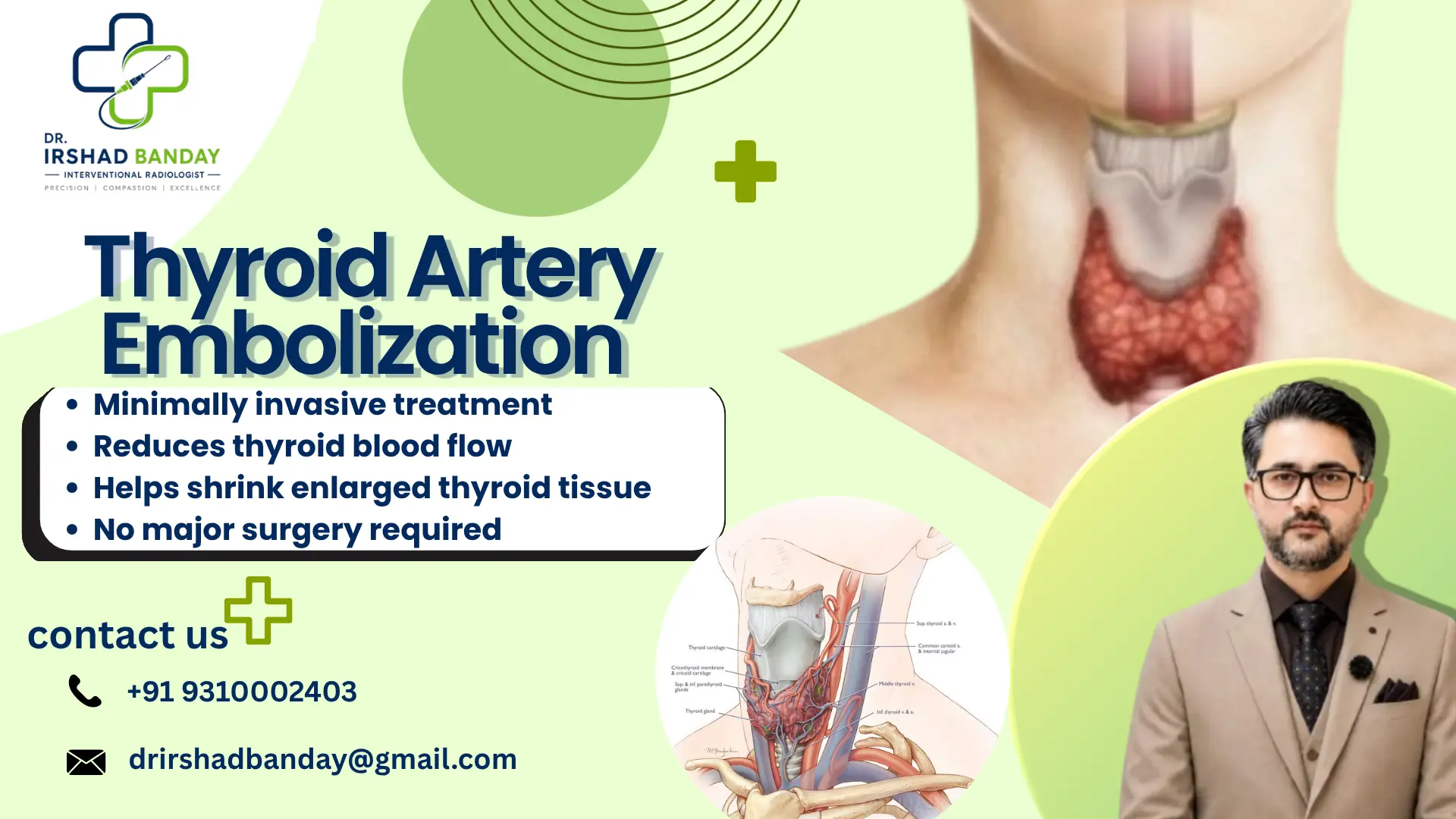
Thyroid Artery Embolization is an advanced minimally invasive interventional radiology procedure designed to reduce the blood supply to thyroid nodules or enlarged thyroid tissue. By blocking selected thyroid arteries with tiny embolic particles, the treated thyroid tissue gradually shrinks over time.
Unlike conventional surgery, Thyroid Artery Embolization treatment does not require general anesthesia or removal of the thyroid gland. The procedure is performed through a tiny puncture in the wrist or groin using image-guided catheters.
This innovative treatment is especially beneficial for patients who:
- Have benign thyroid nodules
- Experience compressive symptoms
- Wish to avoid surgery
- Are considered high-risk surgical candidates
- Prefer a minimally invasive option
Today, Thyroid Artery Embolization is increasingly recognized as an effective alternative to conventional thyroid surgery for selected patients.
Symptoms That May Require Thyroid Artery Embolization
Many thyroid nodules remain symptom-free. However, as they increase in size, they may begin causing noticeable discomfort.
Common symptoms include:
- Visible swelling in the neck
- Lump in the thyroid region
- Difficulty swallowing
- Difficulty breathing while lying down
- Persistent throat pressure
- Hoarseness of voice
- Neck discomfort
- Cosmetic concerns due to enlarged thyroid
- Feeling of fullness in the throat
- Recurrent enlargement despite medication
Patients experiencing these symptoms should consult an interventional radiologist for evaluation to determine whether Thyroid Artery Embolization treatment is appropriate.
Causes and Risk Factors
Several factors contribute to the development of thyroid nodules and enlarged thyroid glands.
Common causes include:
Benign Thyroid Nodules
Most thyroid nodules are non-cancerous and slowly enlarge over time.
Multinodular Goiter
Multiple nodules can develop within the thyroid, leading to thyroid enlargement.
Hypervascular Thyroid Nodules
Some nodules have increased blood supply, making them ideal candidates for embolization.
Hormonal Changes
Changes in thyroid hormone regulation may contribute to nodule formation.
Iodine Deficiency
In some populations, inadequate iodine intake can increase the risk of thyroid enlargement.
Family History
Genetics can influence thyroid disease risk.
Age
Thyroid nodules become increasingly common with advancing age.
Diagnosis Before Thyroid Artery Embolization Treatment
A detailed evaluation is essential before planning Thyroid Artery Embolization.
Medical History
Your doctor evaluates symptoms, thyroid function, previous treatments, and overall health.
Physical Examination
The size, mobility, and characteristics of the thyroid gland are assessed.
Thyroid Ultrasound
Ultrasound helps determine:
- Nodule size
- Number of nodules
- Blood flow
- Cystic or solid components
FNAC (Fine Needle Aspiration Cytology)
FNAC helps confirm that the thyroid nodule is benign before embolization.
Thyroid Function Tests
Blood tests evaluate thyroid hormone levels.
CT Scan (When Required)
CT imaging may be recommended if the enlarged thyroid extends into the chest or compresses nearby structures.
Vascular Imaging
Angiography identifies the arteries supplying the thyroid nodules before the embolization procedure.
Thyroid Artery Embolization Treatment Procedure
The Thyroid Artery Embolization treatment procedure is performed by an experienced Interventional Radiologist using advanced imaging guidance.
Step 1: Local Anesthesia
Only local anesthesia is required. Patients remain awake throughout the procedure.
Step 2: Catheter Insertion
A tiny catheter is inserted through the wrist or groin artery.
Step 3: Angiography
Real-time fluoroscopy helps identify the thyroid arteries supplying the enlarged thyroid tissue.
Step 4: Embolization
Tiny embolic particles are injected into selected thyroid arteries, reducing blood flow to the target tissue.
Step 5: Catheter Removal
The catheter is removed, and gentle pressure is applied to prevent bleeding.
The procedure usually takes 60 to 90 minutes, depending on the complexity.
Most patients return home within 24 hours.
Benefits of Thyroid Artery Embolization
One reason Thyroid Artery Embolization is gaining popularity is its numerous advantages over conventional surgery.
Key benefits include:
- No surgical incision
- No neck scar
- Preservation of healthy thyroid tissue
- Short hospital stay
- Faster recovery
- Minimal pain
- Reduced bleeding
- Lower complication rates
- Lower risk of thyroid hormone deficiency
- High success rates in reducing nodule size
- Quick return to daily activities
For many patients, Thyroid Artery Embolization treatment provides excellent symptom relief while preserving thyroid function.
Recovery After Thyroid Artery Embolization
Recovery is usually much faster compared to thyroid surgery.
Immediately After Procedure
Patients are observed for a few hours.
Some may experience:
- Mild neck discomfort
- Temporary swelling
- Low-grade fever
- Mild soreness
These symptoms usually improve within a few days.
Recovery Timeline
First 24 Hours
- Rest at home
- Drink plenty of fluids
- Resume light activities
Within One Week
Most patients return to work.
One to Three Months
Gradual shrinkage of thyroid nodules begins.
Three to Six Months
Significant reduction in nodule size is usually seen.
Regular follow-up ultrasounds help monitor treatment response.
Thyroid Artery Embolization vs Thyroid Surgery
| Feature | Thyroid Artery Embolization | Thyroid Surgery |
| Incision | No | Yes |
| Scar | None | Neck scar |
| Hospital Stay | Short | Longer |
| General Anesthesia | Usually No | Yes |
| Blood Loss | Minimal | Higher |
| Recovery | Faster | Longer |
| Thyroid Preservation | Better | Partial or complete removal |
| Return to Work | Few days | Several weeks |
For carefully selected patients, Thyroid Artery Embolization provides an excellent minimally invasive alternative.
About Dr. Irshad Banday
Dr. Irshad Banday is one of the leading Interventional Radiologists (Vascular) in Srinagar, specializing in advanced image-guided, minimally invasive treatments. With expertise in vascular and non-vascular interventions, he provides personalized care using the latest technology to deliver effective outcomes while minimizing pain, hospital stay, and recovery time.
Dr. Banday focuses on treating a wide range of conditions without major surgery, helping patients return to their normal lives faster. His patient-centered approach, precision, and commitment to evidence-based medicine have made him a trusted name in interventional radiology across Kashmir.
Services Offered by Dr. Irshad Banday
- Thyroid Artery Embolization
- Thyroid Nodule Embolization
- Thyroid Ablation
- Radiofrequency Ablation (RFA)
- Laser Ablation
- FNAC Biopsy
- Varicose Veins Treatment
- Varicocele Embolization
- Uterine Fibroid Embolization (UFE)
- Prostatic Artery Embolization (PAE)
- Liver Tumor Ablation
- Kidney Tumor Ablation
- Dialysis Fistula Procedures
- Peripheral Vascular Interventions
- Vascular Malformation Treatment
- Image-Guided Biopsy Procedures
Whether you are searching for Thyroid Artery Embolization Near Me or other advanced minimally invasive treatments, Dr. Irshad Banday offers comprehensive interventional radiology services tailored to your condition.
Frequently Asked Questions (FAQs)
1. What is Thyroid Artery Embolization?
It is a minimally invasive procedure that blocks the blood supply to thyroid nodules, causing them to shrink naturally without surgery.
2. Is Thyroid Artery Embolization painful?
Most patients experience only mild discomfort because the procedure is performed under local anesthesia.
3. Who is eligible for Thyroid Artery Embolization treatment?
Patients with symptomatic benign thyroid nodules, multinodular goiter, or those wishing to avoid surgery may be suitable candidates after proper evaluation.
4. How long does the procedure take?
The procedure generally takes between 60 and 90 minutes.
5. Will I need hospitalization?
Most patients are discharged the same day or within 24 hours.
6. Is there any scar after Thyroid Artery Embolization?
No. The procedure is performed through a tiny puncture, leaving virtually no visible scar.
7. How soon will my thyroid nodule shrink?
Most patients notice gradual improvement over three to six months as the treated tissue shrinks.
8. Is Thyroid Artery Embolization safe?
Yes. When performed by an experienced Interventional Radiologist, it is considered a safe and effective procedure for appropriately selected patients.
9. Can thyroid function be preserved after embolization?
Yes. One of the advantages of the procedure is that it targets the abnormal blood supply while preserving healthy thyroid tissue whenever possible.
10. Where can I find Thyroid Artery Embolization Near Me in Srinagar?
Patients in Srinagar and nearby regions can consult Dr. Irshad Banday, an experienced Interventional Radiologist, for evaluation and advanced minimally invasive thyroid treatments.
Conclusion
Modern interventional radiology has transformed the treatment of thyroid disorders, offering patients effective alternatives to traditional surgery. Thyroid Artery Embolization is a safe, minimally invasive option for selected patients with symptomatic benign thyroid nodules or enlarged thyroid glands. It provides excellent symptom relief, avoids major surgery, preserves healthy thyroid tissue, and allows for a faster recovery with minimal scarring.
If you have been diagnosed with a benign thyroid nodule and are looking for a non-surgical solution, consult an experienced interventional radiologist to determine whether Thyroid Artery Embolization treatment is the right choice for you.
Book an Appointment with Dr. Irshad Banday
Looking for the best Thyroid Artery Embolization Near Me in Srinagar? Schedule a consultation with Dr. Irshad Banday – Best Interventional Radiologist (Vascular) in Srinagar. He specializes in FNAC Biopsy, Embolisation, Laser Ablation, Radiofrequency Ablation (RFA), Thyroid Interventions, Varicose Veins Treatment, Varicocele Embolization, Uterine Fibroid Embolization, Prostatic Artery Embolization, and other advanced image-guided minimally invasive procedures. Book your appointment today to receive expert diagnosis, personalized treatment, and world-class non-surgical care.