
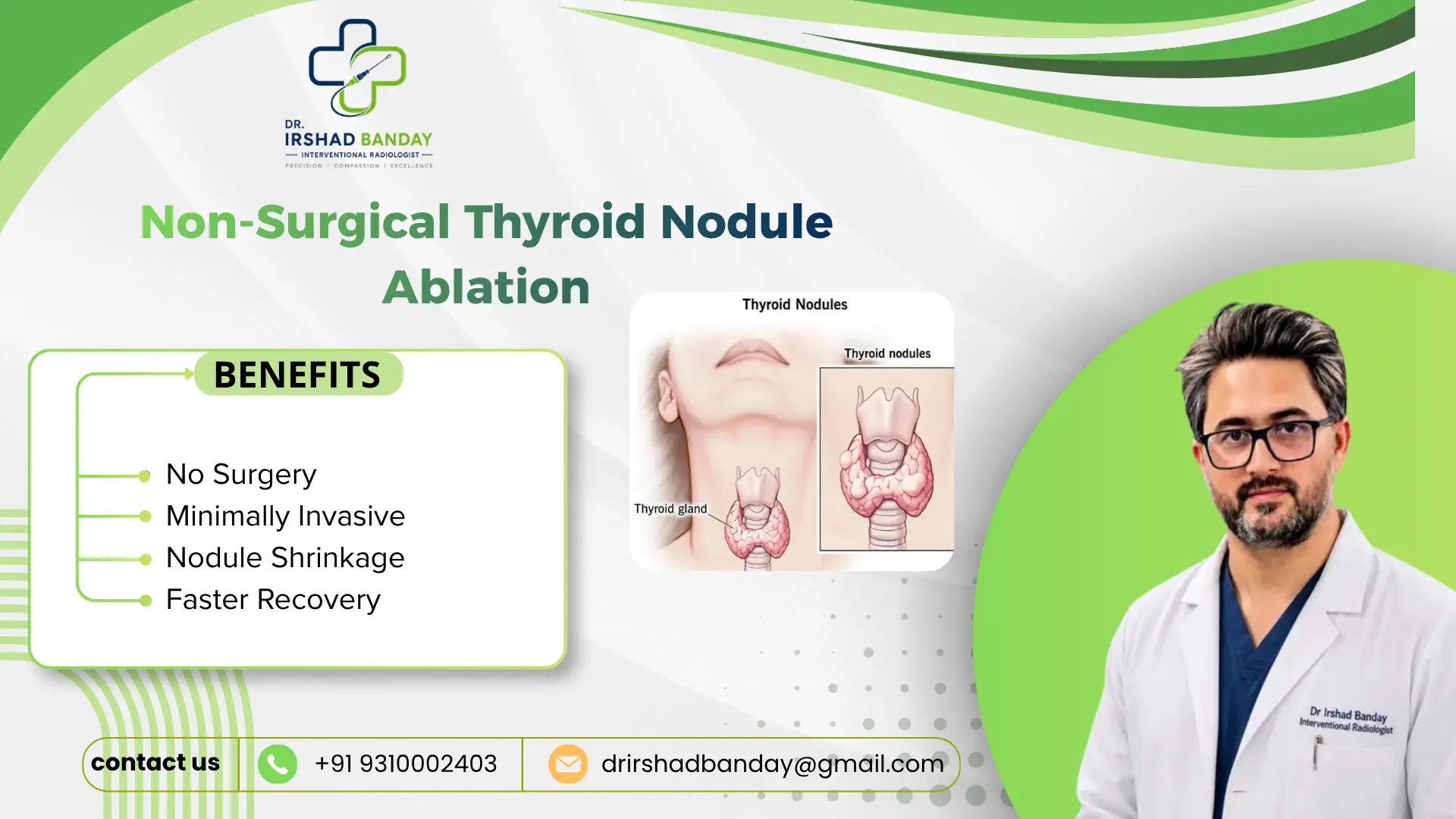
Thyroid nodules are common and are often discovered during a routine examination, ultrasound, or evaluation of neck-related symptoms. Most thyroid nodules are benign, but they still need appropriate assessment to determine their nature, size, function, and potential impact on nearby structures. When a benign nodule becomes large, causes pressure symptoms, produces cosmetic concerns, or is associated with certain functional problems, treatment may be considered.
Non-Surgical Thyroid Nodule Ablation refers to minimally invasive techniques that treat selected thyroid nodules without removing the thyroid gland through conventional open surgery. Depending on the nodule’s characteristics, available techniques may include radiofrequency ablation (RFA), laser ablation, and ethanol ablation for selected cystic nodules.
Among these techniques, Thyroid Nodule RFA has become an established option for appropriately selected benign thyroid nodules. It uses ultrasound guidance to deliver controlled thermal energy to the targeted tissue, allowing the treated nodule to gradually shrink over time. Current professional guidance emphasizes careful patient selection, appropriate diagnostic confirmation, ultrasound assessment, and structured follow-up.
Symptoms, Causes and Diagnosis
Symptoms of Thyroid Nodules
Many thyroid nodules do not cause any symptoms. When a nodule becomes larger or is positioned near important structures in the neck, symptoms may include:
- A visible or palpable lump in the neck
- A sensation of pressure or fullness
- Difficulty swallowing
- A foreign-body sensation in the throat
- Neck discomfort
- Changes in appearance of the neck
- Cough or local pressure symptoms in some cases
- Symptoms of excess thyroid hormone in certain functioning nodules
The presence of symptoms does not by itself determine whether a nodule is benign or malignant. Proper evaluation is therefore essential before deciding on treatment.
Causes and Risk Factors
The exact reason a particular thyroid nodule develops may vary. Nodules can occur as part of changes in thyroid tissue, multinodular thyroid disease, thyroid cysts, inflammation, or other thyroid conditions.
Some nodules produce thyroid hormones independently, while others do not. Previous radiation exposure, increasing age, family history, and certain thyroid disorders can influence the risk profile of thyroid nodules.
Importantly, a treatment such as ablation should not be selected simply because a nodule is visible. Its ultrasound appearance, cytology, symptoms, function, and clinical context need to be considered.
Diagnosis Before Ablation
A comprehensive thyroid evaluation generally includes clinical examination and ultrasound. Ultrasound helps determine the nodule’s size, composition, margins, vascularity, and relationship with surrounding structures.
Fine-needle aspiration cytology (FNAC) or another appropriate tissue-sampling method may be required to establish that a nodule is benign before ablation. Professional RFA guidance recommends appropriate confirmation of benignity before treating most benign nodules, with the exact diagnostic pathway depending on ultrasound characteristics and clinical circumstances.
Blood tests such as thyroid-stimulating hormone (TSH) and other thyroid-function tests may also be used when clinically indicated.
Non-Surgical Thyroid Nodule Ablation should therefore follow diagnosis and treatment planning rather than being used as an initial diagnostic procedure.
Treatment, Methods, Benefits and Risks
Radiofrequency Ablation
Thyroid Nodule RFA is a minimally invasive, ultrasound-guided technique. A thin electrode is introduced into the targeted nodule, and controlled radiofrequency energy generates heat within the treatment area. The operator uses a moving-shot technique to treat different portions of the nodule while monitoring the surrounding structures.
The objective is not necessarily to remove the nodule immediately. Instead, the treated tissue undergoes gradual shrinkage, which can reduce the nodule’s volume and associated pressure or cosmetic symptoms.
Professional guidance describes RFA as an option for selected patients with benign nodules, particularly when symptoms or cosmetic concerns are present.
Laser Ablation
Laser ablation is another thermal technique that can be used for selected benign thyroid nodules. It uses laser energy to produce controlled thermal destruction of targeted tissue.
The appropriate ablation method depends on factors such as nodule size, composition, location, symptoms, previous treatment, and the clinician’s experience with the technique.
Ethanol Ablation
Ethanol ablation is particularly relevant to selected cystic or predominantly cystic thyroid nodules. In this technique, ethanol is introduced into the cystic component to reduce recurrence and volume.
Guidelines distinguish the use of ethanol ablation for cystic nodules from thermal techniques such as RFA, which are commonly used for solid or predominantly solid benign nodules.
Benefits of Non-Surgical Treatment
Potential advantages of appropriately performed Non-Surgical Thyroid Nodule Ablation include:
- No conventional neck incision
- Preservation of the thyroid gland
- Ultrasound-guided treatment
- Local anesthesia in many RFA procedures
- Treatment targeted to the abnormal nodule
- Reduction in nodule volume over time
- Potential improvement in pressure or cosmetic symptoms
- Recovery that may be shorter than conventional thyroid surgery for appropriately selected patients
RFA guidelines recommend local anesthesia and ultrasound-guided techniques for benign thyroid nodule treatment.
Risks and Limitations
Although minimally invasive, ablation is not completely risk-free. Potential complications can include pain, bruising, bleeding, skin injury, infection, voice changes from nerve irritation or injury, and other procedure-specific complications.
The location of the nodule is particularly important because the thyroid lies close to the recurrent laryngeal nerve, trachea, esophagus, and other structures. Appropriate technique and continuous ultrasound guidance are therefore important.
Another consideration is that ablation does not provide the same type of complete surgical specimen as thyroidectomy. This is one reason why appropriate diagnostic confirmation before treatment is important.
Some nodules may require more than one treatment if symptoms or residual viable tissue persist, depending on their size, location, and response. Long-term follow-up with ultrasound and clinical assessment is important.
Surgery Compared With Ablation
Surgery and ablation are different treatment approaches rather than interchangeable procedures for every patient.
Thyroid surgery may be necessary when malignancy is suspected or confirmed, when a nodule has characteristics unsuitable for ablation, or when the overall clinical situation calls for surgical management. Ablation may be considered for appropriately selected benign nodules causing symptoms or cosmetic concerns.
The decision should be based on diagnostic findings, nodule characteristics, patient preferences, expected outcomes, and specialist assessment. The American Thyroid Association also has a professional statement addressing safe performance and adoption of ablation techniques for benign thyroid nodules.
Recovery After Ablation
Recovery following Non-Surgical Thyroid Nodule Ablation varies according to the procedure and the patient’s individual circumstances. RFA is commonly performed using local anesthesia, and patients are monitored after the procedure according to the treating center’s protocol.
Temporary neck discomfort, tenderness, or mild swelling can occur. Patients should follow instructions regarding medications, activity, wound care, and follow-up.
Importantly, the treated nodule does not disappear immediately. It gradually decreases in volume over the following months. Follow-up ultrasound can help assess the ablation zone and measure changes in nodule volume. Thyroid-function testing may also be performed when appropriate.
Frequently Asked Questions About Non-Surgical Thyroid Nodule Ablation
1. What is Non-Surgical Thyroid Nodule Ablation?
Non-Surgical Thyroid Nodule Ablation is a minimally invasive treatment approach that uses techniques such as RFA, laser ablation, or ethanol ablation to treat selected thyroid nodules without conventional surgical removal.
2. What is the Thyroid Nodule RFA?
Thyroid Nodule RFA uses ultrasound guidance to place a thin electrode into a suitable thyroid nodule. Radiofrequency energy then produces controlled heat to treat the targeted tissue.
3. Is RFA suitable for every thyroid nodule?
No. RFA is generally considered for appropriately selected nodules, particularly benign nodules causing symptoms or cosmetic concerns. Diagnostic confirmation and ultrasound assessment are important before treatment.
4. Does thyroid ablation remove the entire nodule immediately?
No. Ablation treats the targeted tissue, which then gradually shrinks. Follow-up ultrasound is used to monitor the reduction in nodule volume and identify any residual or recurrent tissue.
5. Is RFA performed without general anesthesia?
RFA for benign thyroid nodules is commonly performed using local anesthesia rather than general anesthesia or deep sedation, although the exact approach depends on the patient and treating team.
6. Can thyroid function be affected after RFA?
Thyroid function is generally monitored when clinically appropriate. Because the thyroid gland is preserved, ablation is different from procedures that remove part or all of the gland, but individual outcomes can vary.
7. What are the risks of thyroid nodule ablation?
Possible complications include pain, bleeding, infection, skin injury, and voice changes related to nerve irritation or injury. Appropriate patient selection and experienced ultrasound-guided technique are important for reducing procedural risks.
8. How long does it take for a thyroid nodule to shrink?
Shrinkage occurs gradually rather than immediately. The degree and speed of volume reduction depend on factors including nodule size, composition, location, and treatment technique. Follow-up imaging is used to evaluate progress.
9. Can a treated thyroid nodule grow again?
Residual or marginal regrowth can occur in some cases, and additional treatment may sometimes be considered if symptoms or cosmetic concerns persist. Continued clinical and ultrasound follow-up is therefore important.
10. Who can evaluate me for thyroid nodule ablation in Srinagar?
Patients can consult Dr. Irshad Banday, Interventional Radiologist (Vascular), Srinagar, for evaluation of appropriate minimally invasive treatment options. His listed services include FNAC, biopsy, embolisation, laser ablation, and RFA, with treatment selected according to the patient’s diagnosis and clinical requirements.
Conclusion
Non-Surgical Thyroid Nodule Ablation provides a minimally invasive approach for selected patients with appropriately diagnosed benign thyroid nodules. RFA, laser ablation, and ethanol ablation have different applications, so treatment should be individualized according to nodule composition, symptoms, size, ultrasound characteristics, thyroid function, and diagnostic findings.
Thyroid Nodule RFA can reduce the volume of suitable benign nodules while preserving the thyroid gland, but it is not appropriate for every patient and does not replace surgery when surgery is medically indicated. Careful diagnosis, specialist assessment, ultrasound guidance, and follow-up remain essential.
If you have a thyroid nodule, neck pressure, a visible thyroid swelling, or have been advised to consider an ablation procedure, book an appointment with Dr. Irshad Banday, Interventional Radiologist (Vascular) in Srinagar. His services include FNAC, biopsy, embolisation, laser ablation, and radiofrequency ablation (RFA). A consultation can help determine whether Non-Surgical Thyroid Nodule Ablation is appropriate for your specific thyroid condition and what treatment or follow-up may be required.