

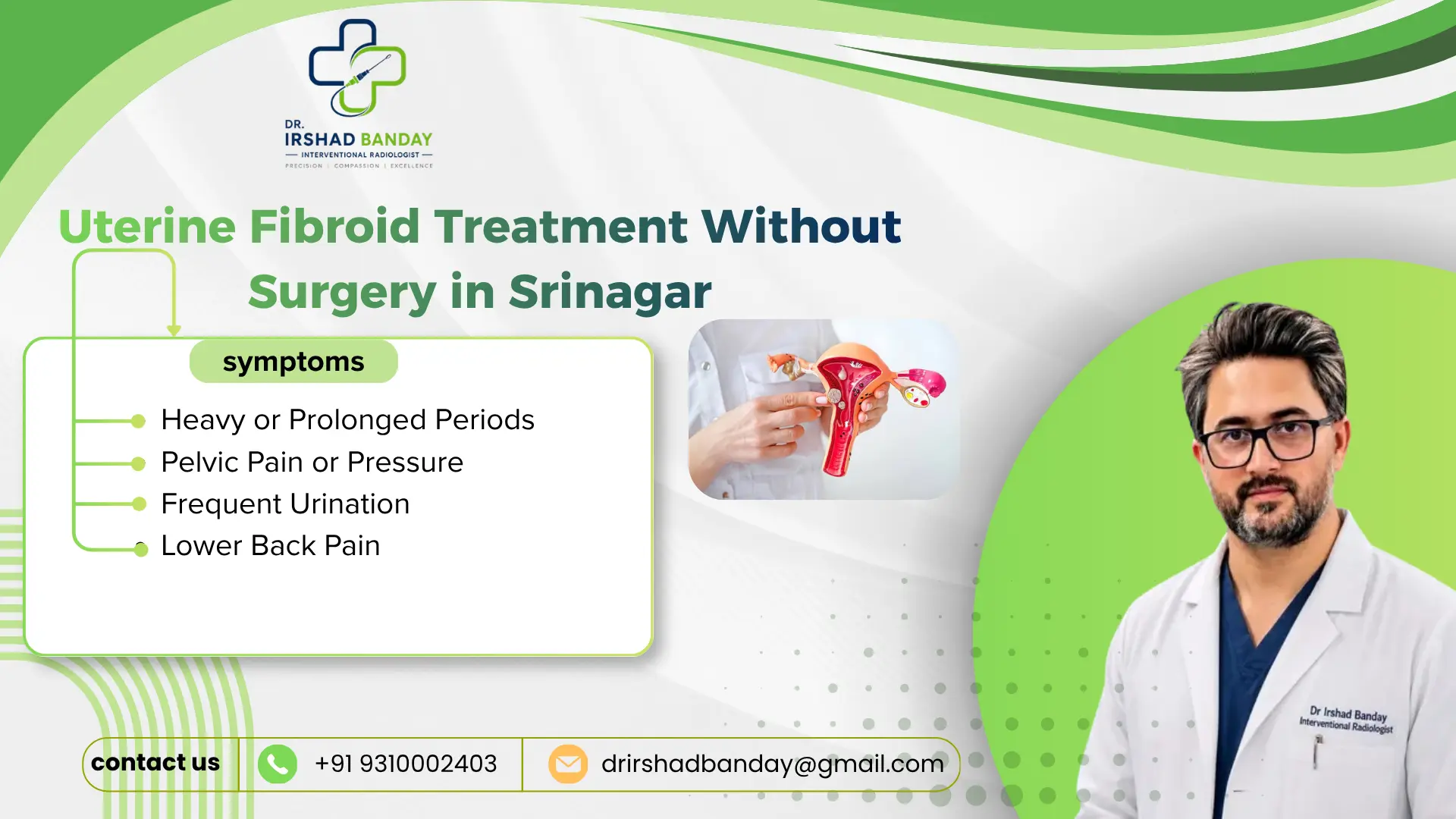
Uterine fibroids are common, non-cancerous growths that develop in or around the uterus. Some women have no symptoms, while others experience heavy menstrual bleeding, pelvic pressure, painful periods, frequent urination, constipation, lower back pain, or anemia. The size, number, and location of fibroids can influence the symptoms and the most appropriate treatment.
For women looking for Uterine Fibroid Treatment Without Surgery in Srinagar, it is important to know that treatment does not always mean removing the uterus or undergoing conventional open surgery. Depending on the individual case, options can include medication, observation, uterine artery embolization (UAE/UFE), radiofrequency ablation, and other minimally invasive approaches.
One option that may be considered by an appropriately selected patient is uterine fibroid embolization, a minimally invasive, image-guided procedure performed by an interventional radiologist. During the procedure, small particles are delivered through a catheter to reduce the blood supply to the fibroid, which can cause it to shrink over time.
What Are Uterine Fibroids and When Is Treatment Needed?
Uterine fibroids, also called leiomyomas or myomas, are growths arising from the muscular tissue of the uterus. They are generally benign and are not the same as uterine cancer. Fibroids can vary considerably in size, number, and location.
Common symptoms of uterine fibroids
Not every woman with fibroids needs treatment. If fibroids are small and do not cause significant symptoms, a doctor may recommend monitoring them rather than immediate intervention.
When symptoms occur, they may include:
- Heavy or prolonged menstrual bleeding
- Painful periods
- Pelvic pain or pressure
- Abdominal fullness or enlargement
- Frequent urination
- Difficulty emptying the bladder
- Constipation
- Lower back or abdominal discomfort
- Pain during sexual intercourse
- Tiredness or weakness associated with anemia
Very heavy bleeding or sudden severe pelvic pain should be evaluated promptly by a healthcare professional.
What causes fibroids?
The exact cause of uterine fibroids is not completely understood. Hormonal and genetic factors appear to play a role, and fibroid growth is influenced by reproductive hormones.
Fibroids can occur in different parts of the uterus:
- Intramural fibroids: develop within the muscular wall of the uterus.
- Submucosal fibroids: grow toward the inner uterine cavity.
- Subserosal fibroids: grow toward the outer surface of the uterus.
Their location can affect symptoms and treatment decisions.
How are fibroids diagnosed?
Diagnosis usually begins with a medical history and clinical examination. Ultrasound is commonly used to identify, measure, and map fibroids. Depending on the symptoms and findings, blood tests may be recommended, particularly when heavy menstrual bleeding could have caused anemia. MRI can provide more detailed information about the number, size, and location of fibroids and may be useful when treatment planning requires additional detail.
Therefore, Uterine Fibroid Treatment Without Surgery in Srinagar should begin with proper diagnosis rather than choosing a procedure solely because it is non-surgical.
What Are the Options for Fibroid Treatment Without Surgery?
The appropriate treatment depends on several factors, including symptoms, fibroid size and location, number of fibroids, age, overall health, previous treatments, and reproductive plans. There is no single treatment that is appropriate for every patient.
Observation and medicines
Women with mild or no symptoms may not require an immediate procedure. Regular follow-up can help monitor changes.
Medicines may be prescribed to control symptoms such as heavy menstrual bleeding or pain. Some hormonal treatments can reduce bleeding and, in selected situations, temporarily reduce fibroid size. However, medicines generally manage symptoms rather than physically removing fibroids.
Uterine Fibroid Embolization
For appropriately selected patients, uterine fibroid embolization (UFE), also known as uterine artery embolization (UAE), is an important Minimally Invasive Fibroid Treatment option.
During UFE, an interventional radiologist guides a thin catheter through an artery toward the blood vessels supplying the uterus. Small embolic particles are then delivered to reduce blood flow to the fibroids. With reduced blood supply, the treated fibroids can shrink and symptoms may improve.
Unlike a hysterectomy, UFE does not involve removal of the uterus. Unlike a conventional open operation, it is performed through a catheter rather than a large surgical incision.
However, UFE is not automatically suitable for every patient. A specialist needs to evaluate the fibroid characteristics, symptoms, imaging findings, and individual goals before recommending the procedure.
Other minimally invasive approaches
Depending on the patient and available expertise, other approaches may include radiofrequency ablation or MRI-guided focused ultrasound. These treatments work differently and have their own indications and limitations.
This is why an individual consultation is important when searching for Uterine Fibroid Treatment Without Surgery in Srinagar rather than selecting a treatment based only on online information.
Uterine Fibroid Embolization Procedure, Benefits and Recovery
Uterine fibroid embolization is performed using image guidance. The interventional radiologist uses a catheter to reach the blood vessels supplying the fibroids and delivers embolic material to reduce their blood supply. The fibroids then gradually shrink rather than being surgically removed.
What happens before the procedure?
Before treatment, the doctor reviews your symptoms, medical history, medications and previous investigations. Imaging such as ultrasound or MRI may be used to understand the fibroid’s size, number and location.
The doctor may also discuss:
- Your menstrual symptoms
- Previous fibroid treatments
- Your general health
- Anemia or other medical problems
- Pregnancy and fertility plans
- Previous surgeries
- Whether embolization is appropriate for your specific fibroid pattern
Potential benefits
For selected patients, UFE may offer several advantages:
- Minimally invasive treatment
- No removal of the uterus
- Treatment through a catheter rather than a large surgical incision
- Ability to target the blood supply of fibroids
- Gradual reduction in fibroid size
- Potential improvement in symptoms such as heavy bleeding and pelvic pressure
- May provide an alternative to some surgical approaches
Mayo Clinic notes that uterine artery embolization can shrink fibroids and relieve associated symptoms, although complications and individual suitability must be considered.
Recovery after UFE
Recovery varies from person to person. Some patients experience cramping, pelvic discomfort, fatigue or mild nausea following embolization. The treating team provides instructions regarding pain management, activity, medicines and follow-up.
The fibroids do not disappear immediately. They generally shrink over a period of weeks to months, and symptom improvement can occur progressively.
Patients should follow their specialist’s advice regarding returning to work, exercise and other activities.
UFE vs conventional surgery
UFE and surgery are different treatment approaches rather than treatments that can be universally ranked against each other.
| Factor | Uterine Fibroid Embolization | Surgical treatment |
| Approach | Catheter-based | Surgical procedure |
| Uterus | Not removed during UFE | Depends on procedure |
| Fibroid | Blood supply is reduced, causing shrinkage | May be surgically removed |
| Incision | Small catheter access site | Depends on surgical technique |
| Recovery | Individual and procedure-dependent | Individual and procedure-dependent |
| Suitability | Depends on fibroid characteristics and patient factors | Depends on procedure and patient factors |
For some patients, surgery may remain the appropriate treatment. For others, a Minimally Invasive Fibroid Treatment such as UFE may be considered. Treatment should be selected after appropriate imaging and specialist evaluation.
Frequently Asked Questions
1. Can uterine fibroids be treated without surgery?
Yes. Depending on the symptoms and characteristics of the fibroids, treatment options may include observation, medicines, uterine artery embolization, radiofrequency ablation and focused ultrasound. Not every option is appropriate for every patient.
2. What is uterine fibroid embolization?
Uterine fibroid embolization is a minimally invasive procedure in which an interventional radiologist uses a catheter to deliver small embolic particles to blood vessels supplying the fibroid. Reduced blood flow can cause the fibroid to shrink.
3. Is UFE suitable for every woman with fibroids?
No. Suitability depends on factors such as fibroid size, location, number, symptoms, medical history and reproductive goals. A specialist assessment is necessary before treatment.
4. Does UFE remove the fibroid?
UFE does not surgically remove the fibroid. Instead, it reduces its blood supply, which can cause the fibroid to shrink over time.
5. How are fibroids diagnosed?
Ultrasound is commonly used for diagnosis. Depending on the situation, blood tests, MRI, hysterosonography or hysteroscopy may also be considered.
6. Can fibroids come back after treatment?
New fibroids can develop, and some procedures may not treat every existing fibroid. Your specialist can explain the possibility of recurrence or further treatment based on your individual situation.
7. Is UFE a replacement for hysterectomy?
UFE can be an alternative to some surgical approaches for selected patients, but it is not appropriate for everyone. Hysterectomy and UFE have different indications, outcomes and implications.
8. How long does recovery take after UFE?
Recovery varies between individuals. Your interventional radiologist will provide personalized guidance based on the procedure and your health. Symptoms such as cramping and fatigue can occur during the early recovery period.
9. Where can I consult for fibroid treatment in Srinagar?
Women looking for Uterine Fibroid Treatment Without Surgery in Srinagar can discuss their condition with an appropriately qualified interventional radiologist to determine whether a minimally invasive approach such as UFE may be suitable.
Choosing the Right Fibroid Treatment in Srinagar
Choosing fibroid treatment should be based on medical evaluation rather than the treatment label alone. The right approach can depend on the severity of symptoms, fibroid location, size and number, age, medical history and future pregnancy considerations.
For women exploring Uterine Fibroid Treatment Without Surgery in Srinagar, consultation with an interventional radiologist can help determine whether uterine fibroid embolization is an appropriate option. A detailed assessment and imaging review are important before making a treatment decision.
If you are experiencing heavy periods, persistent pelvic pressure, abdominal discomfort or other symptoms associated with fibroids, do not delay professional evaluation. Treatment should be personalized to your condition rather than based on a fixed procedure or advertised outcome.
Consult Dr. Irshad Banday in Srinagar
For evaluation of fibroids and minimally invasive treatment options, consult Dr. Irshad Banday – Best Interventional Radiologist (Vascular) in Srinagar | FNAC, Biopsy, Embolisation, Laser Ablation, RFA.
Book an appointment with Dr. Irshad Banday to discuss your fibroid symptoms, imaging findings and whether a minimally invasive treatment option such as uterine fibroid embolization may be appropriate for you.